.svg)


.svg)


“Handoff” sounds tidy. Like you pass a baton, everyone knows the route, and the finish line is inevitable.
In practice, handoffs are where good work quietly unravels.
Not because people aren’t talented. Because “handoff” often becomes a polite word for a gap in shared context. And in that gap, assumptions multiply, edge cases hide, and timelines start doing that stretchy thing timelines do.
At Sketchboat, we prefer a simpler idea: design and development work best as one cohesive unit. Not two separate teams who sync “when needed.” If you want delivery to feel seamless, the easiest lever is also the least glamorous:
Design + dev should talk daily.
Not to create more meetings. To reduce rework, protect intent, and ship with fewer surprises.
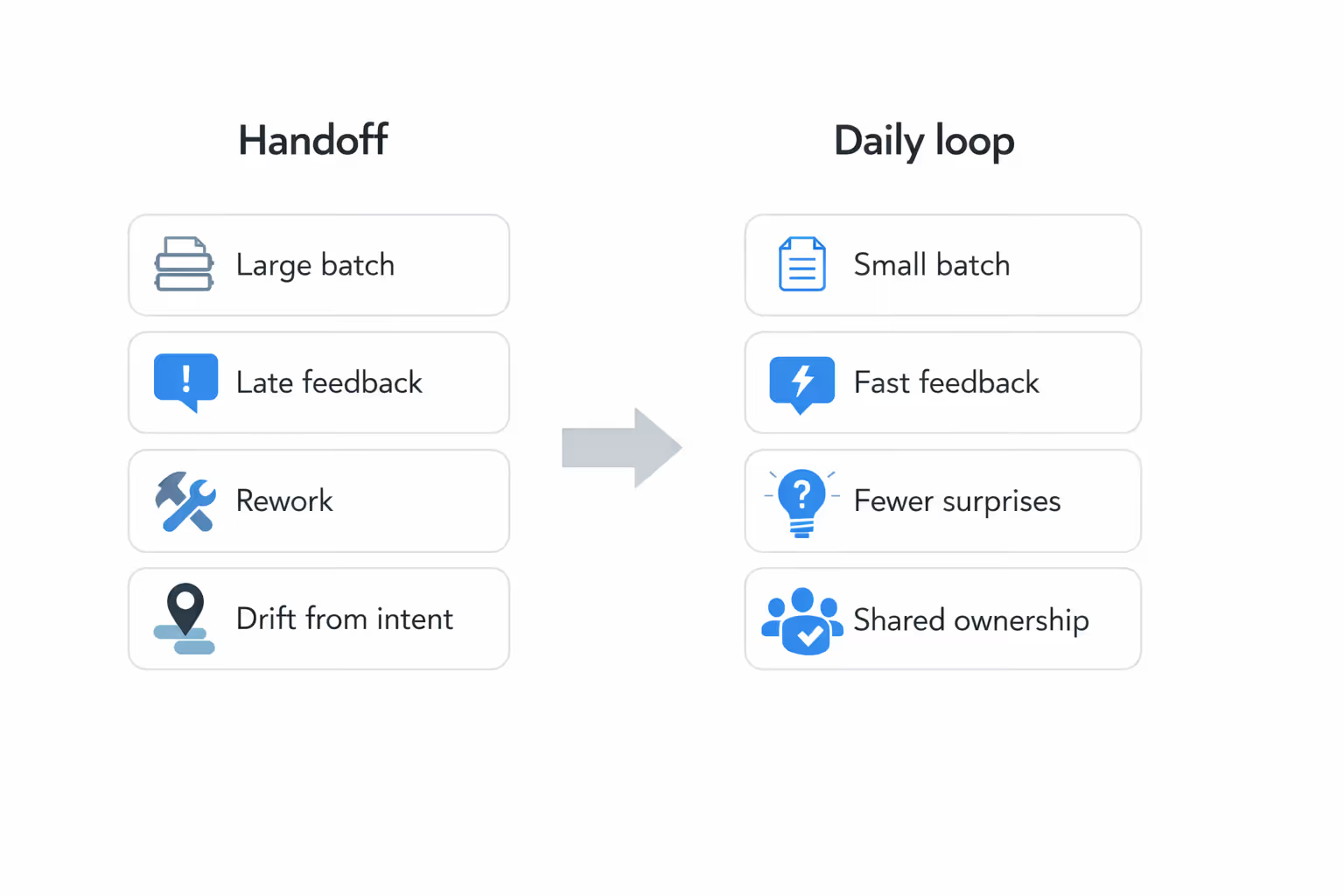
A “clean handoff” assumes:
But design files aren’t products. They’re models of products.
Once you build, you meet reality:
So the question isn’t whether a handoff will be perfectly clean. It won’t be.
The real question is: how quickly do you surface mismatches, and how cheaply can you fix them?
That’s what daily design + dev contact buys you. A faster feedback loop.
When people hear “daily sync,” they picture another calendar obligation.
Fair.
But daily contact doesn’t have to be a meeting. It’s a rhythm that keeps the seam between intent (design) and reality (build) stitched together.
Because the most expensive moment to discover a problem is after code is written, QA is underway, and everyone is already emotionally invested in “being almost done.”
Daily talk shifts discovery earlier:
Simple, but effective.

A product is the outcome of a thousand micro-decisions.
When design and dev operate in separate lanes, you tend to see the same symptoms:
But when design and dev communicate like one team, you get consistency by default. You also get faster decisions, because the right people are in the same conversation while the work is still malleable.
Let’s make this practical. Here are three patterns that work without turning into process theatre.
Do it inside your standup, or right after.
Three prompts:
That’s it.
This huddle is not for status. It’s for alignment: “Are we building the same thing in our heads?”
Pick one screen, one component, or one flow that is actively being implemented and run through a quick checklist:
This is where “frequent and meaningful updates” stops being a value statement and becomes an operating system.
A designer and developer jump into the same problem at the same time for 30 minutes:
This prevents the classic scenario: “We built it, but it doesn’t feel right.”
Because “feel” is often the sum of small things—timing, spacing, hierarchy, and predictable behavior. Those details survive best when design and dev are in the same loop.
Most rework comes from two places:
Examples:
Daily collaboration surfaces assumptions while they’re still easy to correct.
Examples:
When you discover constraints early, you can redesign lightly. When you discover them late, you redesign under pressure.
Daily talk is basically a constraint early-warning system.
Daily collaboration is easiest when the team isn’t re-explaining the same things every day. You want a small set of shared artifacts that reduce friction.
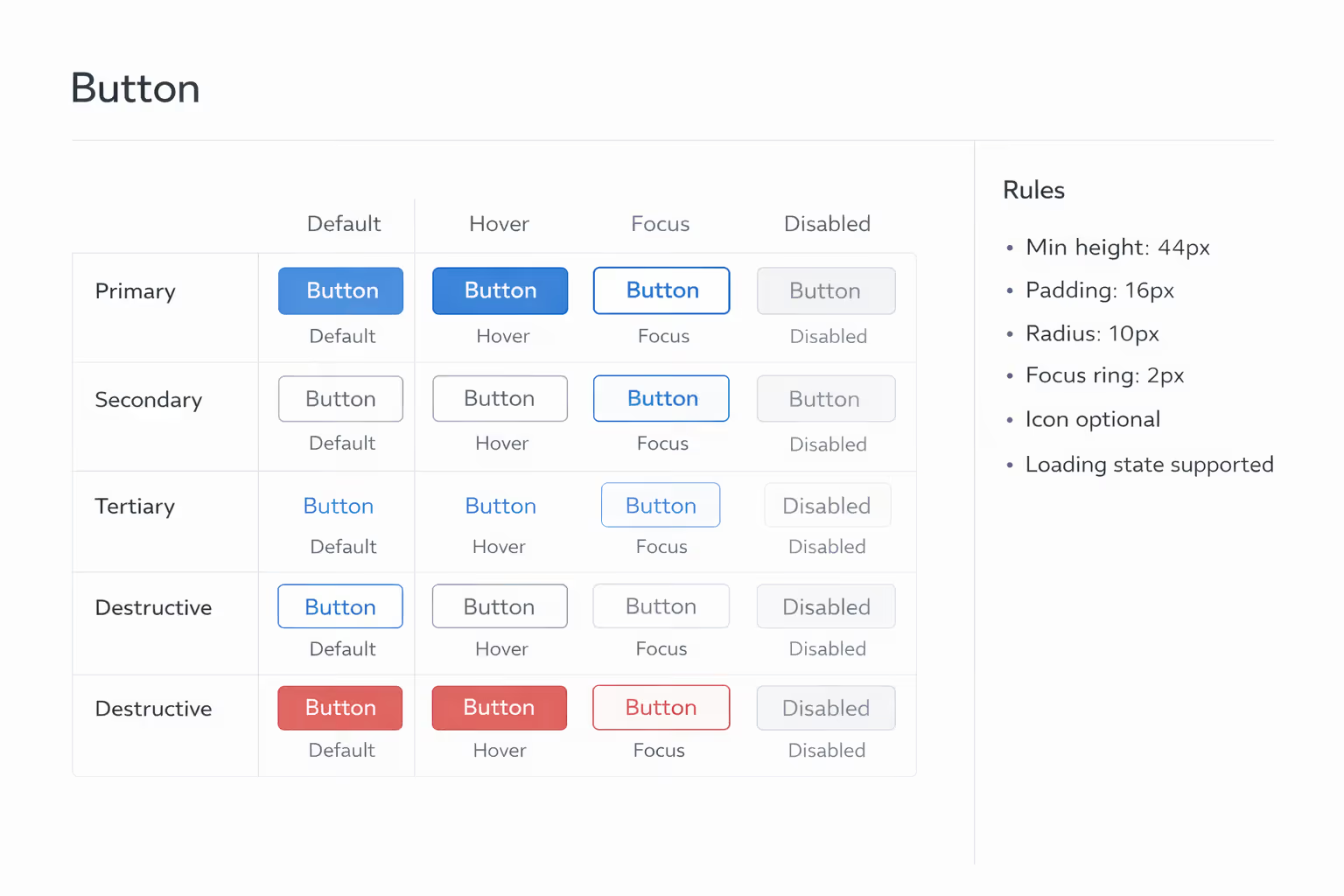
You don’t need a massive design system to get value. You need a reliable set of components that cover the UI you build most often:
Keep it tidy:
Most component chaos comes from “we didn’t want to slow down.” The irony is that component chaos is what slows you down later.
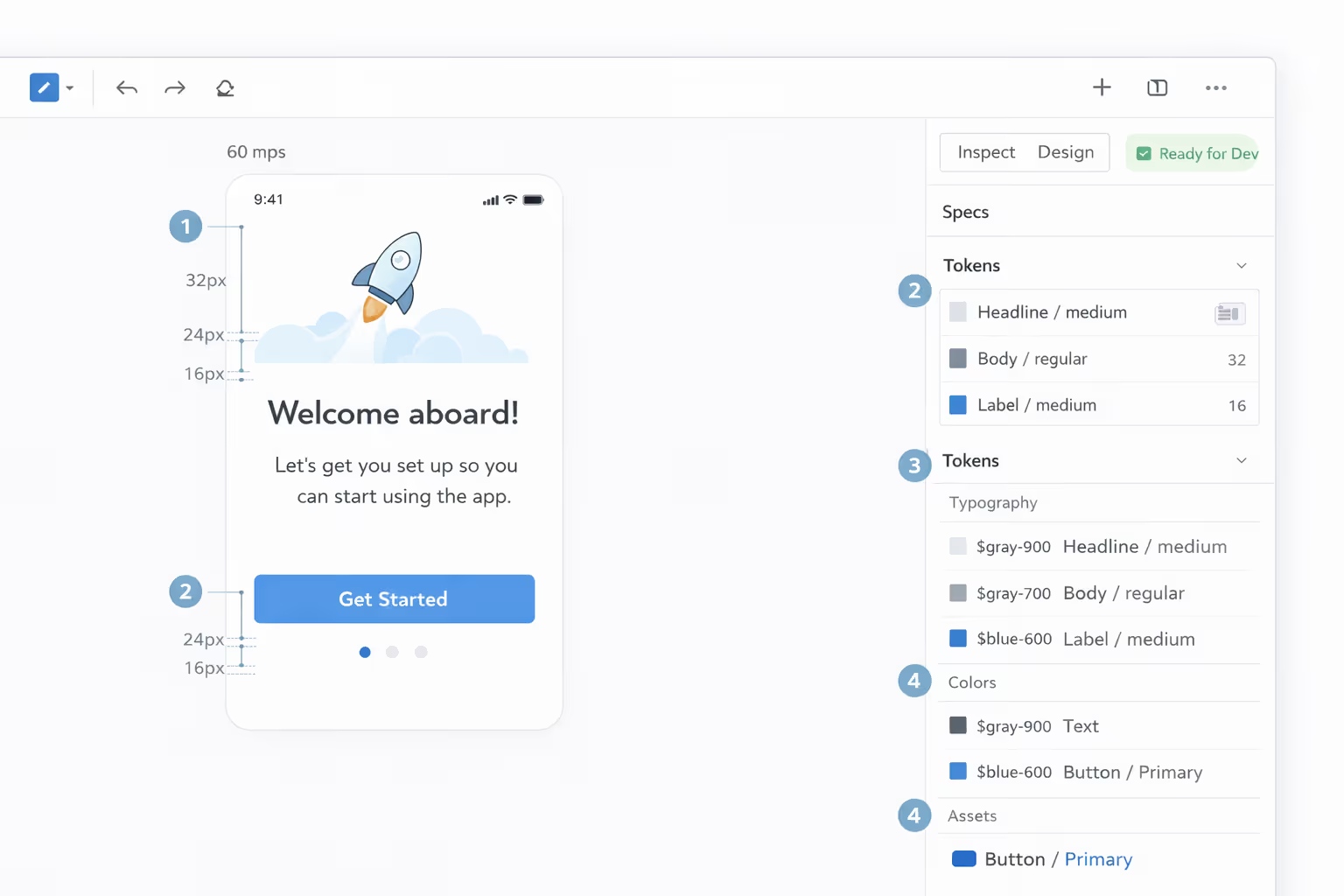
If “ready” means “the screen looks done,” you’re setting everyone up for surprise.
A better “ready” checklist includes:
This is where clarity gets operational.
Design changes happen. Dev trade-offs happen. Product priorities shift.
If the decision trail lives in someone’s head, it will vanish at the exact moment you need it.
Keep a lightweight log:
It doesn’t need to be fancy. It just needs to exist.
Talk daily, but also agree on the sequence. Shipping is easier when you build in the right order:
This reduces the number of times you have to backtrack.
Accessibility is a shared responsibility. If design and dev don’t talk, accessibility becomes “somebody else’s problem,” which is how it becomes nobody’s.
Daily collaboration helps in very practical ways:
If you only bring accessibility in at the end, the fixes are often expensive and feel like compromises. If you bring it into daily delivery, it becomes part of the craft.

This is the most common pushback. And it’s understandable.
But if you never have 10 minutes to align, you are quietly accepting hours of rework later.
If you’re stretched thin, use the smallest version that still creates a feedback loop:
The goal is uncomplicated: maintain absolute clarity while the work is still flexible.
You catch missing states, unclear interactions, and data constraints early.
Teams naturally converge on shared patterns instead of inventing new ones under pressure.
Not just consistent visuals—consistent behavior. Predictable interaction. Cohesive flows.
Because the right people are present while the decision still matters.
The relationship shifts from “I handed it off” to “we’re building this together.”
And that’s the real unlock. Products feel better when the people making them are in sync.
If you’re trying to make this real (not theoretical), start here:
You don’t need a full transformation. You need a feedback loop.
Seamless delivery isn’t magic. It’s coordination.
Daily contact between design and development keeps intent intact, constraints visible, and decisions timely. It turns “handoff” into a continuous loop—small batches, fast feedback, less rework.
If you’re shipping a product, a website, or a platform and delivery keeps getting bumpy, don’t start by adding more tools.
Start by tightening the loop.